
Hanging plants can transform unused vertical space into a natural feature, bringing softness, colour and movement into the workplace without taking up valuable floor area. They can enliven reception areas, soften overhead joinery and make tall commercial interiors feel more welcoming.
The best results combine thoughtful design with practical planning. Plant weight, fixing points, light, watering access and the way people move beneath the display all need to be considered. With the right plants and professional care, a hanging installation can remain attractive, safe and easy for the workplace to enjoy.
Where hanging plants work well in an office
Hanging greenery is particularly useful where a floor planter would interrupt movement or take up working space. It can also draw attention to architectural details and make tall rooms feel more balanced.
Good locations may include:
- reception counters and waiting areas
- breakout spaces and staff kitchens
- collaborative zones
- window lines with suitable light
- shelving and overhead joinery
- open stairwells with safe access
- meeting-room glazing or partitions
- unused corners above low furniture
Not every empty ceiling area needs a plant. The strongest installations respond to the shape of the room and support a clear design purpose.
Begin with the practical constraints
Before selecting pots or plants, assess what the building and workspace can safely support.
Structural fixing points
A hanging display needs an appropriate fixing point. Ceiling tiles and lightweight decorative elements are not designed to carry a suspended planter. The installation may need to connect to a structural element or an approved support system.
Building management, the fit-out contractor or a qualified installer may need to confirm what is permitted. This is especially important in leased offices where changes to ceilings and services require approval.
Weight
The total load includes the planter, growing medium, plant and water. A pot that feels light when empty can become considerably heavier once installed and watered.
Weight must be considered both for safety and for the long-term stability of the fixing.
Clearance
Plants should not hang into normal head height or obstruct circulation. Allow for future growth as well as the plant’s size on installation day.
Check clearance above:
- desks and workstations
- chairs and lounge seating
- corridors and doorways
- kitchen benches
- stairs and landings
- fire equipment, signage and building services
The arrangement should also avoid blocking sprinklers, smoke detectors, air-conditioning vents and lighting.
Maintenance access
Every plant needs to be reached safely for watering, cleaning, pruning and inspection. If a technician cannot access the display efficiently, the location or installation method needs to change.
Match each plant to its light
Hanging plants are often placed high in a room, but height does not guarantee good light. The ceiling area may sit away from windows or above artificial lighting that provides little useful light for plant growth.
A site assessment should consider:
- the direction and intensity of natural light
- distance from windows
- changes in light throughout the day
- nearby blinds or tinted glazing
- artificial lighting hours
- heat near skylights
- airflow from air-conditioning vents
Some trailing plants tolerate lower-light environments better than others, but no living plant thrives without suitable conditions. Where light is inadequate, changing the proposed position is usually better than selecting a plant purely for appearance.
Hanging plant styles for commercial interiors
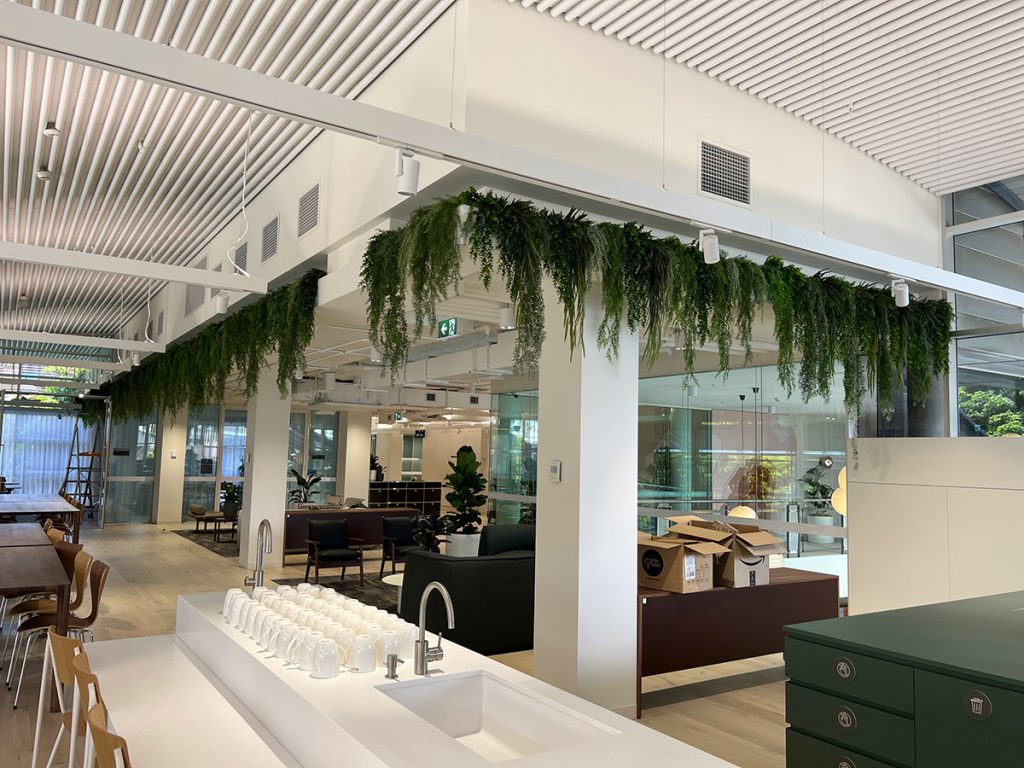
Different installation styles create different effects. The best choice depends on the available structure, visual goal and maintenance requirements.
Individual suspended planters
A single planter can soften a small waiting area, reception corner or breakout space. It works best when the shape and colour of the container connect with the surrounding furniture and finishes.
Grouped planters
A cluster of plants at varied heights can create a stronger feature in a large room. The spacing should look intentional while leaving enough room for each plant to grow and be serviced.
Plants integrated into joinery
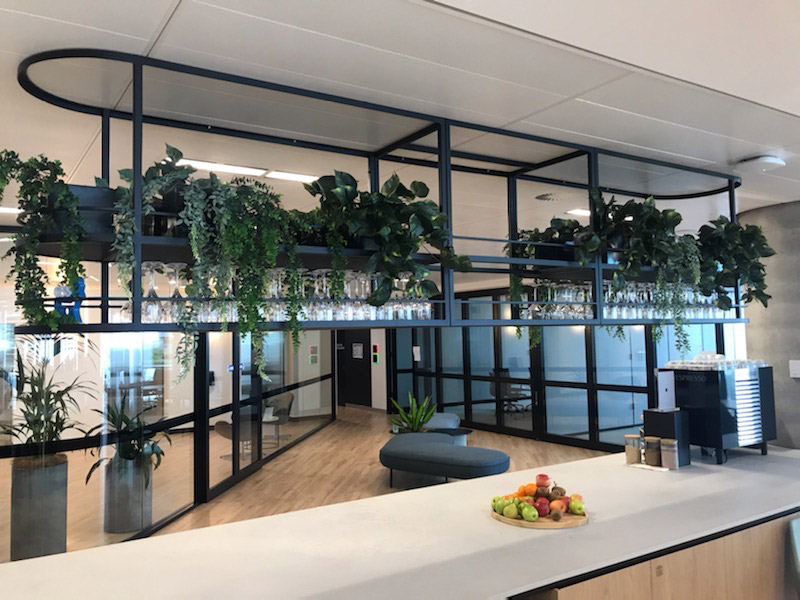
Trailing plants can be incorporated into overhead cabinets, shelving and purpose-built features. This approach can feel more integrated than separately suspended pots, particularly in a new office fit-out.
Gaddy’s provides custom fit-out solutions that can coordinate plants and planters with workplace joinery.
Ceiling grids and suspended frames
A grid or frame can support several planters and create a clear feature above a communal table or collaboration area. This type of installation requires careful planning around load, access and building services.
High shelving
Not every hanging effect needs a ceiling fixing. Trailing plants placed securely on suitable shelving can provide vertical foliage with simpler access. Shelves must still be able to support the total weight and protect surrounding surfaces from moisture.
Suitable plants for a hanging display
Plant selection depends on the exact conditions, but trailing species are often chosen for their ability to soften edges and create movement.
Common options may include:
- pothos or devil’s ivy
- heartleaf philodendron
- spider plants
- selected ferns
- other trailing plants suited to the available light
The mature growth habit matters as much as the plant’s appearance at installation. Consider how far vines may trail, whether the foliage will spread into a walkway and how often pruning will be needed.
Gaddy’s offers a broad range of indoor plants, including compact, floor, desktop and hanging options for commercial interiors.
Choosing the right planter
The planter is part of the design and the working system around the plant. It should complement the workplace while remaining practical to install and maintain.
Consider:
- finished weight
- material and durability
- water management
- attachment method
- colour and texture
- compatibility with the plant’s root system
- access for maintenance
A planter should not rely on improvised drainage into the workplace below. The installation needs an appropriate method for containing water and protecting furniture, flooring and electronics.
For coordinated finishes, browse Gaddy’s range of mini planters and hangers.
Designing with hanging plants without creating clutter
The aim is not to fill every overhead space. Too many suspended elements can make an office feel busy, reduce sightlines and compete with lighting or signage.
Use hanging plants to solve a specific design problem. For example:
- Soften a hard edge: Add trailing foliage above a long bank of joinery.
- Mark a shared zone: Use a grouped installation above a communal table.
- Add depth near glazing: Position plants where suitable light is available without blocking the view.
- Balance a tall room: Bring visual interest down from a high ceiling.
- Connect separate displays: Repeat a planter finish used elsewhere in the workplace.
A restrained arrangement usually looks more professional and leaves room for the plants to remain the focal point.
Hanging plants versus floor plants and green walls
Each option has a different role.
| Option | Best suited to | Key consideration |
|---|---|---|
| Hanging plants | Using overhead space and softening joinery | Structural support and maintenance access |
| Floor plants | Entrances, corners and flexible zoning | Clear floor space and stable planters |
| Planter boxes | Defining larger work or breakout zones | Footprint, circulation and servicing |
| Green walls | Creating a strong vertical feature | Light, wall suitability and maintenance |
| Moss walls | Adding texture where living plants may not suit | Preserved material and interior-only conditions |
A workplace may use more than one type of greenery, but the finishes, scale and plant selection should feel coordinated.
Maintenance at height
Hanging plants require the same core care as other indoor plants, but access makes the maintenance process more specialised.
Regular service can include:
- checking moisture levels
- watering without spills
- cleaning dust from foliage
- pruning trailing growth
- rotating or adjusting plants where appropriate
- inspecting the planter and attachment points
- monitoring pests and plant health
- replacing plants that are no longer performing well
A professionally managed maintenance plan means office staff do not need to access elevated planters or manage watering above desks and equipment. Regular visits help protect the plants, the installation and the workspace below.
With Gaddy’s indoor plant hire, expert design, installation and scheduled maintenance are managed as one hassle-free service.
Questions to answer before installation
Use this checklist when discussing a hanging plant feature with a designer, building manager or plant hire provider:
- What visual or functional purpose should the display serve?
- Is there enough suitable light?
- Where are the approved structural fixing points?
- What is the maximum permitted load?
- Will the plants remain clear of people and furniture as they grow?
- Are sprinklers, detectors, vents and lights unobstructed?
- How will technicians reach the plants safely?
- How will water be contained?
- Does building management need to approve the installation?
- Can maintenance take place without disrupting the workplace?
Answering these questions early avoids compromises after the plants and planters have already been selected.
Bring greenery into the office without losing floor space
Hanging plants can turn unused vertical space into an inviting feature while keeping walkways, desks and shared areas clear. The best installations combine thoughtful design, suitable light, approved fixing points and straightforward maintenance access.
For workplaces considering hanging plant hire in Sydney, Gaddy’s brings more than 40 years of horticultural experience to plant selection, installation and ongoing care. Ready to bring nature indoors without losing floor space? Arrange a free on-site consultation with our team to explore hanging plants and other indoor plant hire options for your office.